


Psoriasis Is Not Just a Skin Disease

Updated: Sep 29
中文摘要在文末
If you read only one article on this site about psoriasis, I'd like it to be this one.
Not because it's the most interesting, but because it covers the parts that don't show on your skin — and one of them causes damage that can't be undone.
Psoriasis is systemic
This is the second thing I tell every psoriasis patient, right after telling them it isn't contagious.
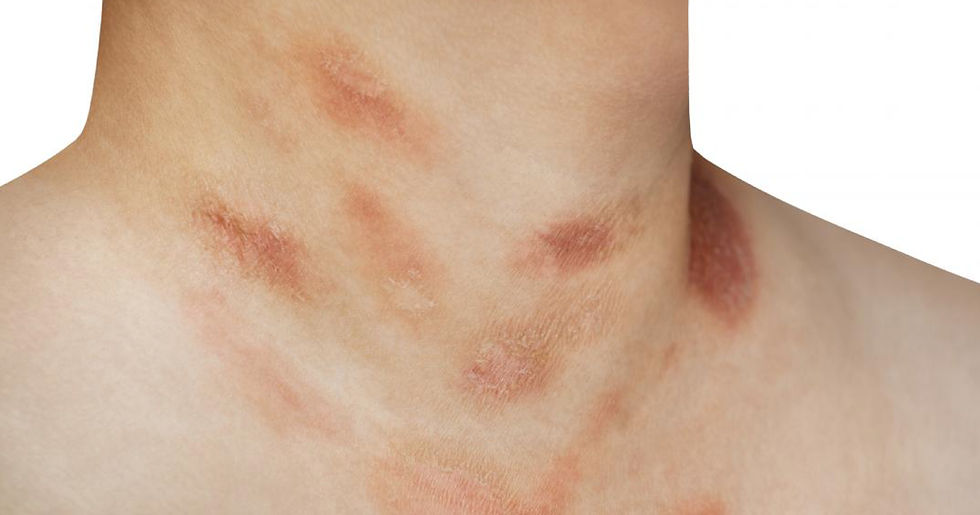
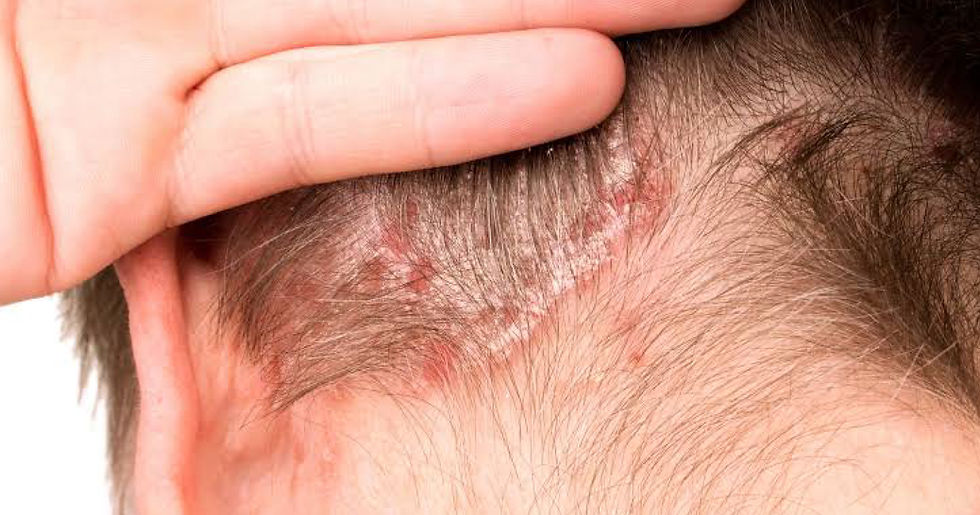
Psoriasis is not a skin problem that happens to be visible. It's an immune-mediated condition affecting your body, of which the skin is the part you can see.
That reframing matters, because it explains why the rest of this article exists. If psoriasis were only skin, then joints, metabolic health and mental burden would be unrelated coincidences. They aren't.
Your joints — the part that can't be undone
I'll be blunt, because this is the section that changes outcomes.
Psoriatic arthritis is part of this disease. And joint damage, once it has happened, does not reverse.
Everything else in psoriasis is retryable. If a treatment doesn't work, we try another. If your skin flares, we get it back under control. Skin is forgiving that way.
Joints are not. Damage accumulates and stays. Which means the whole game with joints is catching things early — and catching things early depends almost entirely on you mentioning symptoms that don't seem relevant.
What I ask about
Morning stiffness. Particularly joints that are stiff when you wake and loosen up as the day goes on. That pattern is meaningful, and it's different from the ache of having overworked something.
Pain or swelling in fingers, toes, or back.
Changes in how you use your hands. Difficulty with buttons, jars, a grip that isn't what it was.
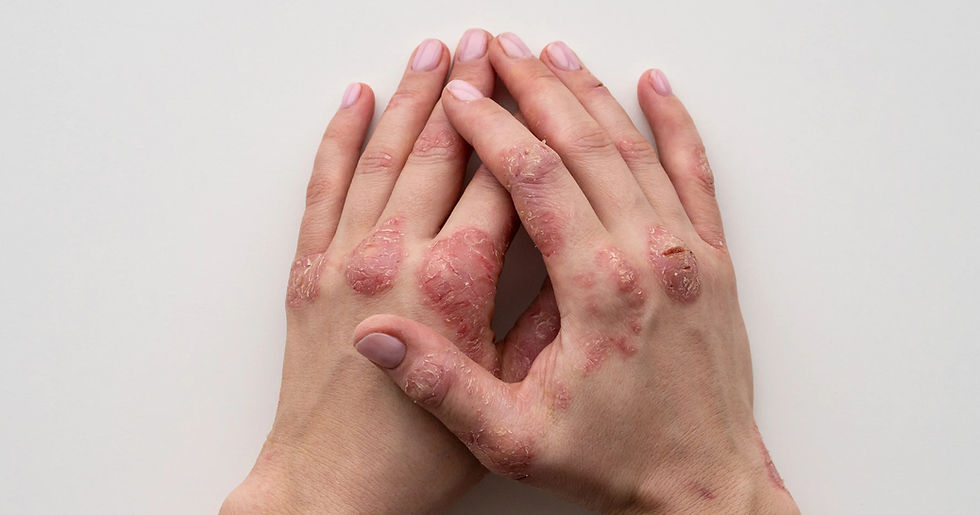
I also pay closer attention to joints if your nails are involved, because nail involvement is associated with psoriatic arthritis.
Why patients don't mention it
Almost nobody volunteers joint symptoms at a skin appointment. The reasons are consistent:
It's not why I came. It's probably just age. I've been working hard, my hands are always sore. The doctor is looking at my skin, joints aren't his department.
Every one of those is understandable, and every one of them can cost you.
So please mention it even if you're certain it's unrelated. Especially then. I'd rather ask about ten sets of joints that turn out to be fine than miss one that wasn't.
What I do about it, and what I don't
Here I want to be honest about my own limits rather than sound more capable than I am.
I assess this mainly on clinical history, monitor for progression over time, and arrange X-rays where they'd help.
But I'm a skin doctor. I'm not a joint doctor, and I'm not an all-rounder. My ability to diagnose psoriatic arthritis well is limited, and I'm aware of that limitation.
So I keep a deliberately low threshold for referring to rheumatology. If there's a real question about your joints, I send you to someone who assesses joints all day, rather than having a go myself and being wrong about something permanent.
I think knowing where your competence ends, and referring at that point, is one of the more important skills in medicine. It's certainly more useful to you than my pride would be.
If I refer you, that's not me giving up on your care. I'll carry on managing your skin. It's me getting the right person onto the part I'm not best placed to handle.
Metabolic health
Psoriasis is associated with metabolic conditions — cardiovascular risk, disordered lipids, raised blood glucose, fatty liver. That association is reasonably well established, and it's part of what "systemic" means in practice.
So I check metabolic parameters in psoriasis patients, and where something needs addressing, we address it.
What's less settled is whether improving those things improves the psoriasis itself. There's a difference between psoriasis and metabolic problems travel together — which is well supported — and losing weight will clear your plaques — which is a much bigger claim and not one I'd make to you.
So I check and manage metabolic health because it matters for your health, not because I'm promising it will fix your skin.
The part nobody sees
Now the thing I think is most underestimated in psoriasis, including by doctors.
The mental burden is the biggest unseen consequence of this disease.
It's lifelong. It's visible. It sits on display in a culture where people comment on appearances and sometimes move away. It flares with stress — which means it flares precisely when you have the least capacity to cope with it, and then the flare adds more stress, which is a genuinely unfair loop.
And most patients carry a low-level, more or less permanent anxiety about it. Not a crisis. Just a constant background weight.
I take this seriously in a specific, practical way, and it shapes what I raise with you.
Why I might not tell you to lose weight
There are things that likely help psoriasis control. Alcohol, smoking and weight come up in the research as factors that, better controlled, may improve how well psoriasis is managed.
Here's how I handle them, deliberately.
If you ask me what else you can do beyond medication, I'll give you these as a list — a neutral list of what the research says, not a set of accusations about your habits. If you want to go deeper on any of them, I'll go into detail and help you properly.
But I generally won't raise them unprompted if I think you're already carrying as much as you can carry.
I run a weight management programme at this clinic. If you have psoriasis and you're overweight, I could construct a perfectly good clinical argument for enrolling you. And I usually won't bring it up — because psoriasis is already taxing, and stacking a demanding long-term programme on top of someone who is stressed and struggling risks a breakdown rather than an improvement.
If you want to talk about it, raise it and we'll talk properly. If you don't, I'll assume you have enough on your plate.
Sunlight, and why I don't push it
In theory, sun exposure helps psoriasis. It's a real effect and it's the principle behind phototherapy.
In practice I don't see much of that benefit locally, and I think I understand why. Psoriasis patients often have low self-esteem about their skin. They avoid going out. And when they do go out, they cover everything.
Telling someone whose entire instinct is to hide their skin that they should go and expose it to the sun is not a small ask. So I don't press it. If someone's in a place where it's realistic, fine. If they're not, adding it to the list just adds another way to feel they're failing.
And it is not contagious
Back to where I always start.
Psoriasis is not contagious. You cannot pass it to anyone by touch, by sharing a towel, by using the same pool, by anything.
I demonstrate this in the consultation rather than just asserting it — I examine and touch the affected skin, and then simply carry on with the consultation rather than heading straight for the sink. That gesture communicates something a sentence can't.
And if your family come with you, I'll explain it to them directly. I offer that deliberately, because convincing the people around you is often harder than convincing you, and it isn't a job you should have to do alone with no medical backing. Having a doctor say it, in front of everyone, changes the conversation at home.
What to bring up at your next appointment
Any joint symptoms, however unrelated they seem
Morning stiffness specifically
Nail changes
How it's actually affecting your mood, sleep and daily life — that's clinical information, not a complaint
Anything you've been told by someone else that's worrying you
Klinik Dr Tan (Skin & Acne), Lot 27, Ground Floor, Block D, Lintas Square, Kota Kinabalu. WhatsApp 017-234 7328. Appointments preferred, and family are welcome.
I'm a GP with a strong interest in skin, not a dermatologist. For phototherapy, higher-tier systemic treatment, or joint assessment, I refer — to hospital dermatology and to rheumatology respectively.
Book a consultation with Dr. Tan — Book Online or WhatsApp 017-234 7328.
Read more about Psoriasis : Psoriasis Treatment, Scalp and Nail Psoriasis, The Moving Baseline, 5 Psoriasis Mistakes
简要说明
我是陈医生,亚庇 Lintas Square 的 Klinik Dr Tan(皮肤与暗疮)。我是对皮肤有专长的普通科医生,不是皮肤专科医生。
如果这个网站关于干癣你只读一篇,我希望是这一篇——因为它谈的是皮肤上看不到的部分,而其中一项造成的损伤无法挽回。
干癣是全身性的:它不是「刚好看得见」的皮肤问题,而是影响全身的免疫介导疾病,皮肤只是你看得见的那一部分。
关节——无法挽回的那一部分
乾癣性关节炎是这个疾病的一部分。而关节一旦受损,就不会逆转。
干癣的其他部分都可以重来:这个药无效就换下一个,皮肤发作就再控制回来。皮肤是宽容的。关节不是。 损伤会累积并留下。所以关节这件事完全在于及早发现——而及早发现几乎完全取决于你是否愿意提起那些看起来无关的症状。
我会问的:晨间僵硬(起床时僵硬、活动后缓解——这个模式有意义,跟劳累的酸痛不同);手指、脚趾、背部的疼痛或肿胀;使用双手方式的改变(扣钮扣、开罐子、握力不如从前)。如果你的指甲有侵犯,我会更留意关节,因为指甲侵犯与乾癣性关节炎有关联。
为什么病人不提:「我不是为这个来的」「大概是年纪吧」「最近做工多,手本来就酸」「医生在看皮肤,关节不是他的范围」。每一个都可以理解,每一个都可能让你付出代价。
所以即使你确定无关也请说。尤其是那种时候。 我宁可白问十个人的关节,也不愿漏掉一个。
我怎么处理,以及我不做什么:我主要靠临床病史评估、追踪进展,需要时安排 X 光。
但我是皮肤科医生,不是关节医生,也不是全科通才。我诊断乾癣性关节炎的能力有限,而我清楚这一点。
所以我刻意维持很低的转介风湿科门槛。如果你的关节有真正的疑问,我会把你送去每天在看关节的人那里,而不是自己冒险判断一件永久性的事。
知道自己的能力边界在哪里、并在那一点转介,是医学里比较重要的能力之一。对你来说,那肯定比我的自尊有用。
转介不代表我放弃你的照护——你的皮肤我会继续管。
代谢健康
干癣与代谢状况有关联——心血管风险、血脂异常、血糖升高、脂肪肝。这个关联相当确立,也是「全身性」在实务上的意义之一。所以我会检查干癣病人的代谢指标,需要处理就处理。
比较不确定的是:改善那些指标是否能改善干癣本身。 「干癣和代谢问题会同行」(有充分支持)和「减重会让你的斑块消退」(大得多的宣称)是两回事,后者我不会对你说。
所以我检查并管理代谢健康,是因为它关系到你的健康,不是因为我承诺它会治好你的皮肤。
没有人看见的那一面
心理负担是干癣最大的隐形后果,我认为连医生都低估了它。
它是终身的、看得见的,暴露在一个会评论外表、有时还会退开的文化里。它因压力而发作——也就是说,它正好在你最没有余裕应付的时候发作,而发作又增加压力,这是一个真正不公平的循环。
为什么我可能不会叫你减重
研究提到酒精、吸烟、体重若控制得好,可能改善干癣的控制。我的处理方式是刻意的:
如果你问我除了药物还能做什么,我会把这些当成一份清单说给你听——一份中性的、研究怎么说的清单,不是对你生活习惯的指控。你想深入哪一项,我就细谈并认真协助。
但如果我觉得你已经承受到极限,我通常不会主动提。
我的诊所有体重管理计划。如果你有干癣又过重,我可以建构一套完全成立的临床理由让你加入。而我通常不会提——因为干癣本身已经很消耗,在一个压力大、正在苦撑的人身上再叠加一个要求很高的长期计划,风险是崩溃,不是改善。
你想谈就提出来,我们好好谈。你不提,我就当你已经够忙了。
关于晒太阳:理论上有帮助,这是光疗的原理。但我在本地看不到太多这种效果,原因我想我明白——干癣病人常常对自己的皮肤缺乏自信、不太出门、出门也包得密不透风。叫一个本能上想遮住皮肤的人去晒太阳,不是一个小要求。所以我不会硬推——否则只是多给他一个觉得自己失败的理由。
而且它不会传染
干癣不会传染。 不会经由触摸、共用毛巾、共用泳池,或任何方式传给别人。
我在诊间用行动示范而不只是断言——我检查并触摸患部,然后直接继续问诊,而不是马上走向洗手台。那个动作传达的东西,一句话做不到。
而且如果家人跟你一起来,我会直接向他们说明。 我是刻意提供这件事的,因为说服你身边的人往往比说服你更难,而那不该由你独自、毫无医学支持地承担。 由医生当着大家的面说出来,会改变家里的对话。
下次回诊请提起:任何关节症状(不论看起来多无关)、晨间僵硬、指甲变化、它实际上如何影响你的情绪睡眠和生活(那是临床资讯,不是抱怨)、以及别人跟你说过而让你担心的任何事。
Klinik Dr Tan (Skin & Acne),Lot 27, Ground Floor, Block D, Lintas Square, Kota Kinabalu。WhatsApp:017-234 7328。建议预约,欢迎家人同行。光疗、更高阶的全身性治疗、关节评估,我会分别转介医院皮肤科与风湿科。
Book a consultation with Dr. Tan — Book Online or WhatsApp 017-234 7328.

Comments